In summary:
- Stop reacting to disruptions; start building a supply chain with systemic redundancy that treats volatility as a predictable parameter.
- Diversify carriers and suppliers geographically, but strategically pair this with logistical consolidation to control costs.
- Shift from lean Just-In-Time models to a hybrid « Just-In-Case » approach with intelligent buffer stocks for critical components.
- Fortify your contracts by scrutinizing Force Majeure clauses and understanding how they interact with your cargo insurance.
- Leverage real-time data not just for tracking, but for predictive analytics and transparent client communication.
If you’re a UK import/export director, the phrase « stuck at the border » has likely become a recurring nightmare. The post-Brexit landscape was promised as a gateway to new opportunities, yet for many, it has materialized as a labyrinth of customs declarations, unexpected tariffs, and crippling delays. The sleepless nights spent tracking a stranded container, the frantic calls to appease anxious B2B clients, the bottom-line erosion from demurrage fees—this is the new operational reality. The standard advice you’ve heard a thousand times— »digitize your paperwork, » « find a good broker »—is well-intentioned but fundamentally misses the point. These are tactical patches on a deeply structural problem.
The core issue isn’t a single customs form or a specific port. It’s systemic fragility. For decades, we built supply chains optimized for lean, frictionless, just-in-time delivery within a single market. That world is gone. Trying to operate that old system in this new, high-friction environment is like trying to drive a Formula 1 car on a gravel road. It’s not the car’s fault when the suspension breaks; the entire design is wrong for the terrain. The platitudes focus on fixing the car, but seasoned operators know you need a different vehicle altogether.
But what if the true path to future-proofing your logistics wasn’t about avoiding delays, but about building a system that expects them? This guide reframes the challenge entirely. We will move beyond reactive fixes and into the domain of strategic resilience. We will not talk about simply surviving disruption, but about constructing an anti-fragile logistics network—a system that anticipates volatility and has the built-in redundancy to absorb it without catastrophic failure. This is about treating strikes, customs failures, and currency swings not as unforeseen disasters, but as manageable operational parameters.
This article provides a blueprint for fortifying your operations. We will deconstruct the most common failure points—from supplier concentration to contractual oversights—and provide experienced, practical strategies to build a supply chain that is not just resilient, but robust in the face of persistent uncertainty. It’s time to stop losing sleep over what’s stuck at the border and start building the infrastructure that ensures it gets through, every time.
Summary: How to Future-Proof Your Supply Chain Logistics Against Post-Brexit Customs Delays
- How to Diversify Your European Suppliers Without Increasing Shipping Costs?
- Why Relying on a Single Courier Contract Exposes You to Ruinous Q4 Strikes?
- Which Strategy to Choose Between Just-In-Time and Buffer Stock During Global Shipping Crises?
- The Paperwork Error That Leaves Goods Stranded in UK Ports for Weeks
- The Real-Time API Solution to Appease Anxious B2B Clients During Transit
- Which Method to Choose Between First-In-First-Out and Last-In-First-Out for Perishable Goods?
- The Force Majeure Contract Oversight That Leaves You Paying for Goods Destroyed at Sea
- How Advanced Risk Mitigation Strategies Protect Your Profit Margins From Currency Crashes?
How to Diversify Your European Suppliers Without Increasing Shipping Costs?
The knee-jerk reaction to post-Brexit supplier friction has been diversification. This is sound advice, but naively executed, it can decimate profit margins by trading customs headaches for soaring logistics costs. Spreading your sourcing across ten different EU countries might seem resilient, but managing ten separate, smaller shipments is an operational and financial nightmare. The strategic move isn’t just diversification; it’s geographical consolidation. This means identifying alternative sourcing regions that offer not just competitive production costs but also logistical efficiency.
Look for opportunities to cluster your sourcing. Instead of one supplier in France, one in Germany, and one in Spain, could you find three competitive suppliers in a single region like Northern Italy or near a major port like Antwerp? This allows you to consolidate less-than-truckload (LTL) shipments into full truckloads (FTL), dramatically reducing your cost-per-unit. Furthermore, look beyond the EU. The new trade landscape has opened up non-traditional routes that bypass EU friction entirely. This requires a shift in mindset from continental sourcing to a truly global, « best-path » approach.
Case Study: The Moroccan Sea Route as a Brexit Bypass
Since Brexit created stricter, often slower, trade regulations for perishable goods from the EU, many UK importers have faced significant challenges. A prime example of successful geographical diversification is the emergence of Morocco as a key supplier for fresh produce. By leveraging a direct shipping route that bypasses the EU entirely, importers have sidestepped the most severe customs chokepoints. Data from a Maersk analysis on Brexit’s logistical impact shows that UK imports from Morocco surged by 166% from £157.7 million in 2019 to £403.7 million in 2022. This demonstrates how a targeted pivot to a new region with efficient, direct logistics can turn a major supply chain threat into a competitive advantage.
The reality is that for many businesses, post-Brexit friction has been costly. An industry analysis revealed that over 70% of UK firms reported higher supply chain costs after the transition. The key to mitigating this is not to simply add more suppliers, but to re-architect your sourcing map around logistical hubs. This approach transforms diversification from a cost-adding exercise into a strategic cost-control and resilience-building initiative.
Why Relying on a Single Courier Contract Exposes You to Ruinous Q4 Strikes?
Loyalty to a single carrier may feel efficient, but in today’s volatile climate, it’s a catastrophic single point of failure. The pre-Brexit era of stable, predictable freight is over. We now operate in an environment where labor disputes, driver shortages, and port strikes are not « if » but « when. » Relying on one provider means your entire operation is held hostage by their labor negotiations, their capacity constraints, and their operational failures. A wildcat strike during the Q4 peak season can do more than delay shipments; it can erase your annual profit.
The solution is systemic redundancy. This doesn’t mean having a messy rolodex of 20 carriers. It means establishing a formal, two-tier carrier system: a primary partner for the bulk of your volume (to secure preferential rates) and a fully onboarded, contracted secondary partner who can take on 20-30% of your volume at a moment’s notice. This secondary carrier isn’t just a name on a list; they should have your shipping profiles, understand your customs requirements, and be integrated into your systems. The slightly higher cost of maintaining this dual relationship is a negligible insurance premium against total operational paralysis.
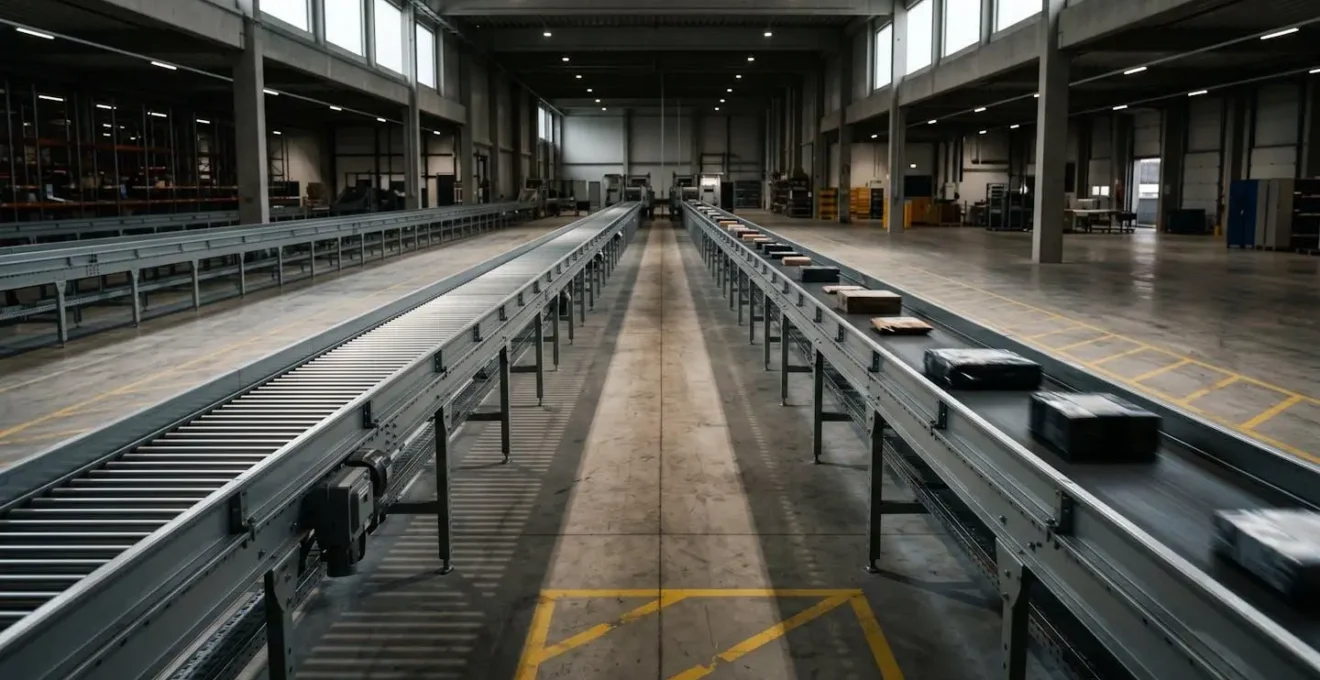
As the image above illustrates, a dual-network strategy is about having a parallel system ready to activate. When your primary channel is disrupted—whether by a port strike affecting 43% of a nation’s imports or a local haulier’s industrial action—you don’t scramble. You pivot. The key is to treat the second half of 2025 and all of 2026 as a continuous strike season, shifting from a reactive response to proactive, anticipatory planning. This turns disruption from an existential threat into a manageable variable.
This dual-carrier model is the bedrock of an anti-fragile network. It provides the operational flexibility needed to navigate not just strikes, but also sudden surges in demand, carrier-specific route failures, or capacity crunches. The days of putting all your eggs in one logistical basket are definitively over. Building this redundancy is no longer a « nice-to-have »; it’s a fundamental requirement for survival.
Which Strategy to Choose Between Just-In-Time and Buffer Stock During Global Shipping Crises?
For decades, « Just-In-Time » (JIT) was the gospel of supply chain efficiency. It slashed warehousing costs and minimized waste, working beautifully in a world of predictable lead times. Post-Brexit and post-pandemic, that world no longer exists. Clinging to a pure JIT model today is an act of extreme negligence. When a 2-day transit from Calais can unpredictably become a 10-day ordeal, a lean inventory is not a sign of efficiency; it’s a guarantee of production line stoppages and failed customer deliveries.
The pendulum has swung from « Just-In-Time » to « Just-In-Case » (JIC). As research shows, many businesses switched from JIT to JIC during the pandemic to survive. However, a blanket JIC approach—hoarding mountains of every component—is just as foolish, trading the risk of stock-outs for the certainty of crippling holding costs and obsolescence. The intelligent, resilient strategy is a hybrid, data-driven buffer stock model. This isn’t about holding more of everything; it’s about holding more of the *right* things.
This approach involves a rigorous analysis of your Bill of Materials (BOM). Classify your components based on two axes: lead-time volatility and criticality to production. A non-critical component with a stable, reliable UK-based supplier can remain on a near-JIT schedule. However, a critical component sourced from a single EU supplier with a history of customs delays demands a significant buffer stock—perhaps 2-4 weeks’ worth—held in a UK warehouse. As President Joe Biden noted when addressing supply chain challenges, the previous focus on lean systems left no room for error.
Prior to the crisis, we shared the focus on lean efficient supply chains, leaving no buffer or margin for error.
– President Joe Biden, White House address on supply chain challenges
This isn’t a retreat from efficiency. It’s a redefinition of it. True efficiency in the 2020s is not about zero inventory; it’s about 100% operational uptime. The cost of holding a strategic buffer of critical parts is fractional compared to the cost of a factory shutdown or losing a key retail contract due to out-of-stocks. The future belongs to those who can master this intelligent balance between lean principles and resilient buffers.
The Paperwork Error That Leaves Goods Stranded in UK Ports for Weeks
While we focus on grand strategies like diversification and buffer stocks, the most common cause of catastrophic delays remains painfully mundane: paperwork. A single incorrect Harmonized System (HS) code, a missing Rules of Origin declaration, or a typo in the commodity description can leave a multi-million-pound shipment languishing in a port for weeks, accumulating demurrage charges and angering clients. A comprehensive survey revealed that an astonishing 72% of UK businesses have experienced customs delays post-Brexit, and the vast majority stem from documentation errors.
The platitude is to « digitize your paperwork, » but this solves nothing if the data being digitized is wrong. The real solution lies in a two-pronged approach: radical simplification and automated verification. First, conduct a ruthless audit of your product portfolio’s customs data. Work with a specialist to pre-classify every single SKU with the correct HS code and country of origin. Consolidate where possible. Do you really need 37 slightly different product variants, each requiring its own declaration, or can you streamline your offering?

Second, invest in a system that automates the generation of customs declarations directly from your sales order or ERP system. This eliminates the risk of manual data entry errors by the shipping department. As the layered process shown above suggests, modern customs clearance is about multiple, rigorous checks. Your internal system should be the first and most important layer. The goal is to make the correct documentation the path of least resistance. Every commercial invoice and packing list should be automatically generated with 100% accurate, pre-verified information.
This isn’t about hiring a better customs broker; it’s about providing your broker with flawless data so they can do their job. The responsibility for data accuracy rests with the exporter/importer, not the agent. Investing in this internal data integrity is the single highest-ROI action you can take to eliminate the most frequent and frustrating source of post-Brexit delays. It turns customs from a game of chance into a predictable, administrative process.
The Real-Time API Solution to Appease Anxious B2B Clients During Transit
In an era of uncertainty, silence is interpreted as failure. When a B2B client’s crucial shipment is in transit, the worst thing you can provide is an information vacuum. The old model of « it will get there when it gets there » is dead. With over 60% of consumers expecting faster delivery, this expectation for speed and transparency has bled directly into the B2B world. Your clients are running their own JIC models; they need to know precisely where their goods are to manage their own operations. A vague update from a freight forwarder is no longer sufficient.
The solution is to provide proactive, direct-to-client visibility through a real-time data feed. This is achieved by integrating your carriers’ Application Programming Interfaces (APIs) into your own client portal or ERP system. Instead of your client having to call your logistics team, who then calls the freight forwarder, who then checks a carrier’s portal, the client can see the shipment’s status themselves, 24/7. This isn’t just about showing a dot on a map; it’s about providing structured data: « At Port, » « Customs Clearance Initiated, » « On Final Mile Delivery. »
This move transforms your customer service model from reactive firefighting to proactive reassurance. It frees up your logistics team from answering endless « where is my order? » calls and allows them to focus on managing exceptions. As one industry expert noted, the goal is turning raw data into usable information.
The ability to make informed, real-time decisions becomes even more critical as supply chains continue to get more complex and less predictable. Modern companies generate more data than ever across their supply chains, but turning that data into actionable intelligence requires sophisticated tracking systems.
– Logistics Provider, Inbound Logistics
Implementing an API-driven visibility solution does more than appease anxious clients; it builds profound trust. It demonstrates that you are in control of your supply chain and that you view your client as a partner. In a competitive market, this level of operational transparency is a powerful differentiator and a key component of customer retention. It changes the conversation from « Where is it? » to « I see it’s cleared customs, excellent. »
Which Method to Choose Between First-In-First-Out and Last-In-First-Out for Perishable Goods?
For businesses dealing with perishable goods, post-Brexit customs delays are not an inconvenience; they are an existential threat. A standard delay can turn a valuable shipment of fresh produce or chilled goods into a total loss. The traditional inventory management method, First-In-First-Out (FIFO), which assumes a stable and predictable flow, is dangerously inadequate in this new environment. LIFO (Last-In-First-Out) is entirely unsuitable for perishables. The choice of inventory withdrawal method is now a critical risk management decision.
Case Study: The UK Cheese Exporter’s Nightmare
The consequences of failed inventory strategy are stark. UK cheese exporters reported devastating losses when perishable stock sent to EU events was delayed at customs. According to reports, several shipments destined for the World Cheese Awards were held up by paperwork errors and subsequently incinerated. One Belgian food retailer, after experiencing losses of €10,000 to €15,000 per shipment from customs failures, has now ceased importing chilled goods from the UK altogether. This highlights how poor inventory and transit management can lead not just to financial loss, but to the complete destruction of trade relationships.
The strategic response is to move beyond simple date-of-arrival logic. The following table, based on an analysis of modern inventory strategies, compares traditional methods with more advanced approaches necessary for navigating today’s volatile landscape.
| Method | Priority Basis | Best Use Case | Risk Level | Technology Required |
|---|---|---|---|---|
| FIFO (First-In-First-Out) | Warehouse arrival date | Stable supply chains, predictable lead times | High for volatile supply chains | Basic WMS |
| FEFO (First-Expired-First-Out) | Expiration date | Buffer stock scenarios, variable transit times | Low | Lot tracking WMS |
| Dynamic Prioritization | Remaining shelf life vs. real-time ETA | Post-Brexit customs delays, unpredictable transit | Very Low | IoT sensors + API integration |
As the data shows, the most resilient method is Dynamic Prioritization. This requires investment in technology like a lot-tracking Warehouse Management System (WMS) and ideally IoT sensors that monitor real-time transit data. This system allows you to make dispatch decisions based not on when a pallet arrived, but on its real-time remaining shelf life versus the real-time ETA to its destination. If a shipment to the EU is suddenly delayed, the system can automatically flag a newer pallet with a longer shelf life for dispatch, preserving the older stock for shorter, more reliable domestic deliveries. This is the definition of an anti-fragile system: using real-time data to dynamically mitigate risk.
Key takeaways
- Systemic Fragility Is the Enemy: Your goal isn’t just to manage delays but to build an « anti-fragile » network that absorbs volatility through planned redundancy.
- Contracts Are Your First Line of Defense: A poorly worded Force Majeure clause is a financial time bomb. Scrutinize and fortify your legal agreements as rigorously as you manage your physical inventory.
- Data Is Your Best Weapon: Shift from reactive tracking to proactive, predictive analytics. Use real-time data to provide client transparency, dynamically manage perishable stock, and hedge against financial risks.
The Force Majeure Contract Oversight That Leaves You Paying for Goods Destroyed at Sea
Many directors believe a « Force Majeure » clause is a magic shield that protects them from any unforeseen event. This is a dangerously naive assumption. In reality, these clauses are often narrowly written and can be a trap that leaves you liable for goods lost or destroyed due to disruptions like port strikes or customs seizures. A carrier might declare Force Majeure to absolve themselves of delivery obligations, but your payment obligations to your supplier may still stand. You could be left paying for a container of goods at the bottom of the sea or incinerated at a port.
As Ilya Preston, CEO of PAXAFE, stated in an industry analysis on port strike impacts, « When a major disruption like this labor stoppage takes place, the impact to supply chains can be catastrophic. » This catastrophe is often financial, and it begins in the fine print of your contracts. You must actively engage in contractual fortification. This involves a meticulous review of all freight agreements, supplier contracts, and insurance policies to ensure they align and that you are not left exposed in the gaps between them.
Specifically, cross-reference your carrier’s Force Majeure definitions with the « Named Perils » in your cargo insurance. Does your insurance cover losses due to « labor disputes » or « customs delays »? If not, you have a critical exposure. Furthermore, push to include a « Duty to Mitigate » clause in your carrier contracts. This requires any party declaring Force Majeure to prove they used all reasonable commercial efforts to overcome the event, preventing them from using it as a convenient excuse for poor planning.
Action Plan: Fortifying Your Contracts Against Disruption
- Review Freight Agreements: Ensure contracts explicitly address labor-related delays, who is responsible for demurrage, and options for re-routing during strikes to limit downstream disputes.
- Audit Insurance Gaps: Cross-reference supplier Force Majeure clauses against your cargo insurance policy to identify gaps between « Named Perils » and « All Risks » coverage for events like strikes or civil commotion.
- Insert Mitigation Clauses: Include a ‘Duty to Mitigate’ clause requiring parties declaring Force Majeure to prove they used ‘all reasonable commercial endeavors’ to overcome the event.
- Understand Legal Backstops: Familiarize yourself with the English legal concept of ‘Frustration of Contract’ as a potential backstop when a Force Majeure claim is disputed or invalid.
- Clarify Title Transfer: Pinpoint the exact moment of title and risk transfer in your Incoterms. If a strike delays goods at a port, knowing who legally owns them is critical.
How Advanced Risk Mitigation Strategies Protect Your Profit Margins From Currency Crashes
In the focus on physical logistics, a silent killer of profit margins is often overlooked: financial volatility. Post-Brexit currency fluctuations and new, unexpected regulatory costs can erode the profitability of a deal long before the goods even ship. A sudden 5% drop in the pound against the Euro can turn a profitable export order into a loss. Similarly, new regulations like the EU’s Carbon Border Adjustment Mechanism (CBAM) or the Emissions Trading System (ETS) for shipping introduce new, variable costs that many businesses fail to account for.
Treating these financial risks as unavoidable « costs of doing business » is a failure of strategy. Just as you build redundancy into your physical supply chain, you must build it into your financial and contractual framework. This is done through proactive financial hedging and contractual cost-pass-through clauses. For currency risk, this can involve using forward exchange contracts to lock in an exchange rate for a future transaction, removing uncertainty from the equation.
For regulatory costs, the strategy is transparency and contractual agreement. You must model these potential costs and build them into your B2B sales contracts. A well-drafted « currency or regulatory cost adjustment » clause allows you to pass on or share these unforeseen expenses with your client, protecting your margin. The key is to make it a transparent, pre-agreed mechanism, not a surprise surcharge.
Case Study: Hedging Against EU Carbon Pricing
The EU’s Emissions Trading System (ETS) for maritime shipping provides a clear example of a new, predictable cost. For a Rotterdam-Athens trip, the fuel cost for one tonne of merchandise was €16.45. With the addition of €80 per carbon emission allowance, the transport expense increased by 26.6% to €20.83. This isn’t a random fluctuation; it’s a measurable regulatory cost. An advanced risk mitigation strategy would involve using forward contracts to hedge against the price of these carbon allowances and, crucially, including a clause in B2B sales agreements that adjusts the final price based on the prevailing ETS rate at the time of shipping. This protects the seller’s margin from regulatory volatility.
An anti-fragile supply chain is not just about moving boxes efficiently; it’s about protecting the financial integrity of every transaction from source to destination. By proactively managing currency and regulatory risks, you transform them from unpredictable threats into manageable, priced-in variables. This is the final, critical layer of future-proofing your business.
By integrating these strategies—from dual-carrier networks and hybrid inventory models to contractual fortification and financial hedging—you move your organization beyond a state of constant, reactive crisis management. You begin to build a truly anti-fragile logistics operation that has the strength, flexibility, and intelligence to thrive in an era of permanent volatility. To put these principles into practice, the next logical step is to conduct a full audit of your current supply chain vulnerabilities against the framework provided in this guide.